We didn't build CarmaCircle on a hunch and a mood board.
We started by talking to the people who live inside the hiring machine all day – recruiters, talent teams, hiring managers – and they all said a version of the same thing: the resume is dead. Then we went and checked the data to see if they were just being dramatic.
They were not.
The resume measures the wrong thing
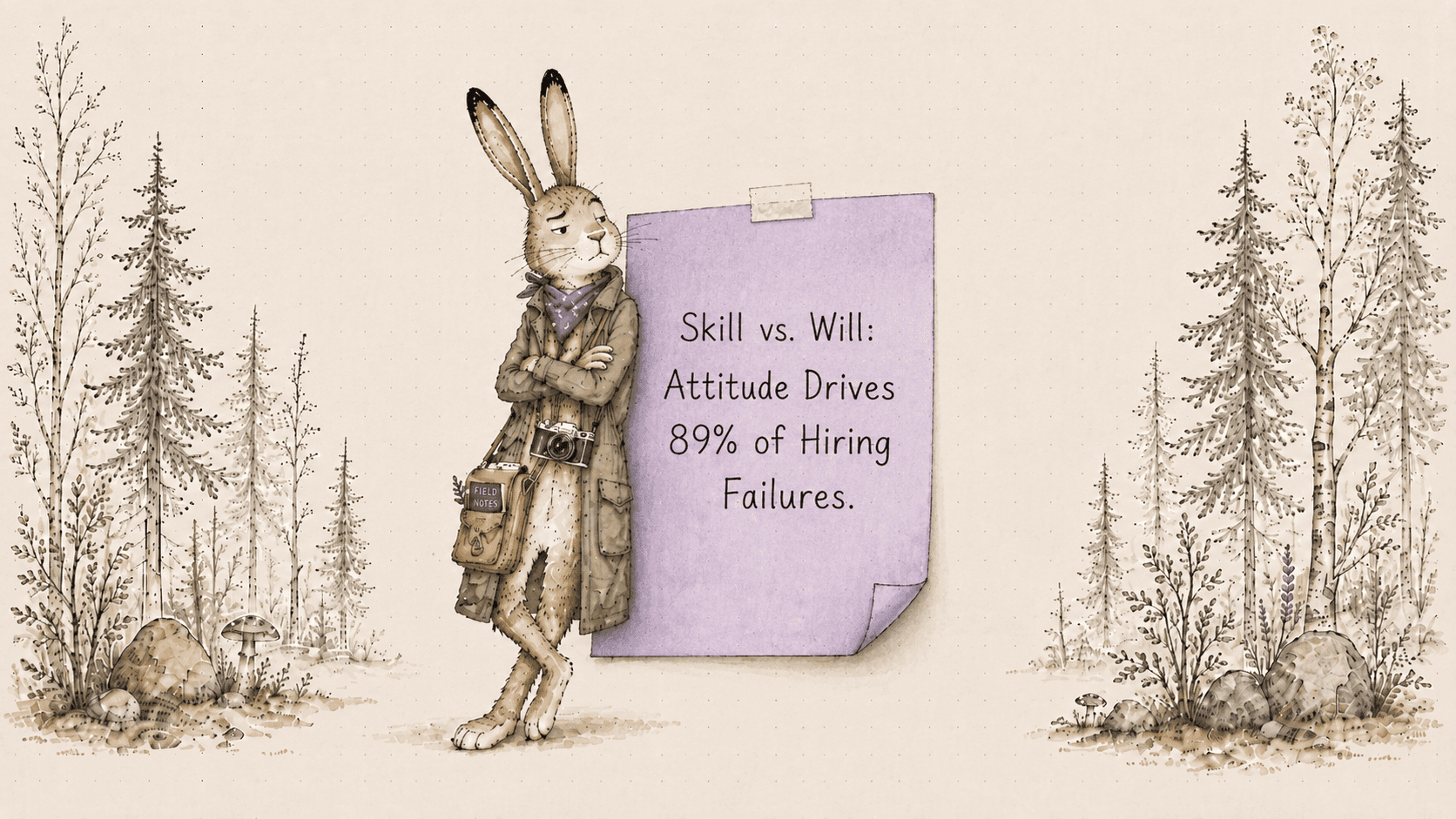
Here's the dirty secret of hiring: when a new hire flames out, it's almost never because they couldn't do the technical work. 89% of hiring failures come down to attitude and soft skills, not a skills gap, a finding from a study of more than 20,000 hires. People don't get fired for not knowing Python. They get fired for how they show up with their coworkers.
And here's the worst part: the piece of paper the whole process was built around generations ago gives absolutely 0% of context around behavioral fit.
The market knows this, on some level. 94% of companies say practical skills predict on-the-job success more accurately than a resume, and 81% have moved to some form of skills-based hiring. Everyone agrees the resume is a bad signal. But instead of replacing it, we just keep piling more skills-verification data on top of an incomplete foundation.
So everyone games it, and the whole thing chokes
When you're only getting answers to half your questions, you're forced into a numbers game – and it's worse now than it's ever been. AI writes the resume, a different AI screens it, and a human may never enter the chat. 88% of employers admit qualified people get filtered out of the process for not matching the exact wording of a job description.
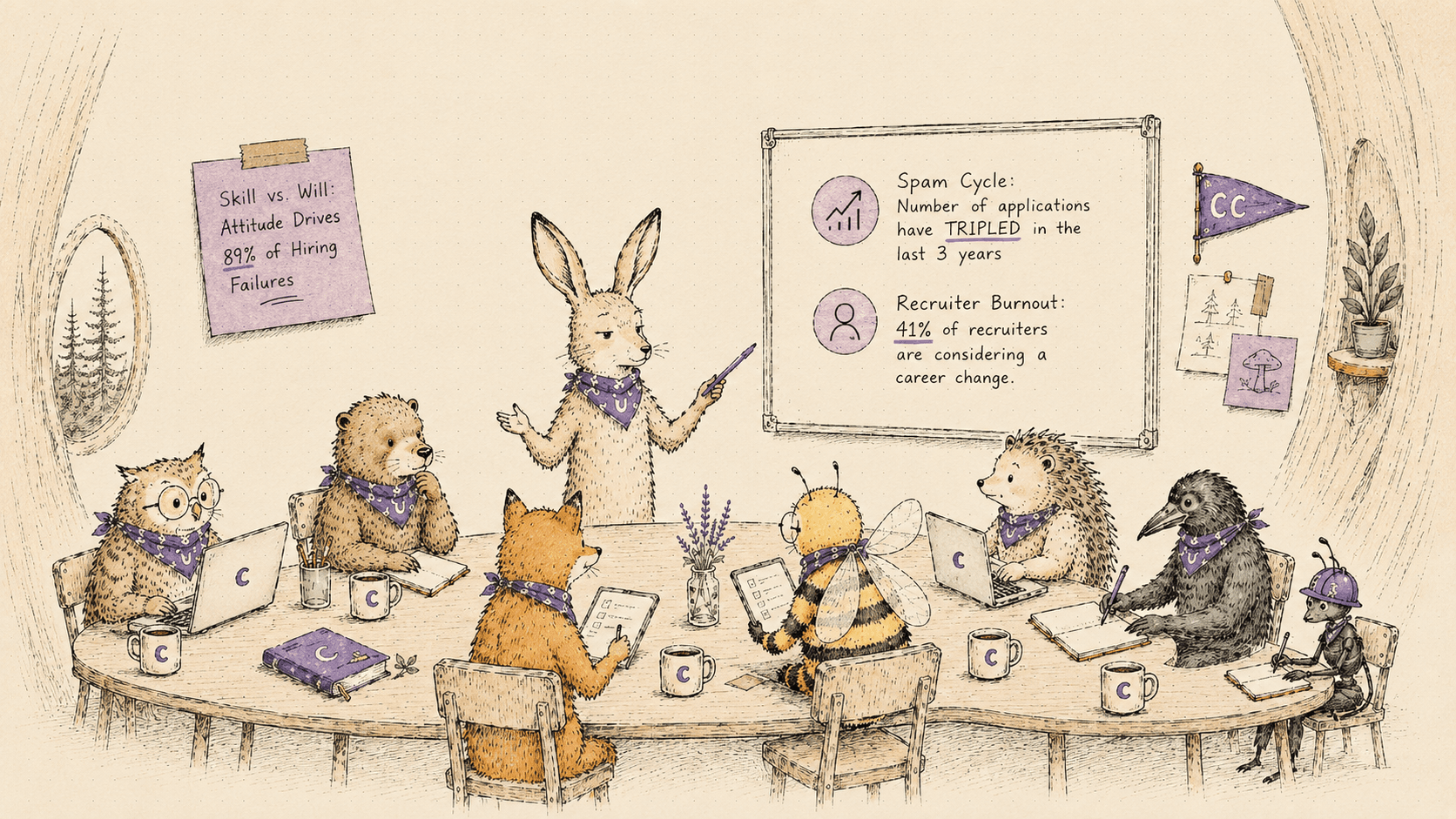
Workers feel it as a void. Job boards generate 49% of all applications but only 24.6% of actual hires – meaning the channel everyone's told to use produces half the applications and a quarter of the outcomes. You apply, you tailor, you "optimize for the ATS," you hear nothing. Rinse, ghost, repeat.
And before you assume the people on the other side are sitting pretty: they're drowning too. The average recruiter now processes 2.7x more applications and manages 56% more open requisitions than they did three years ago. A huge share of a recruiter's day goes to work that requires zero recruiting skill – data entry, scheduling, chasing people down. No surprise that 41% of recruiters say they're thinking about leaving the profession entirely. Companies are now selecting the people best at navigating the hiring process, not best at doing the job, because acing an AI-assisted interview is "infinitely scalable and practically free."
That's not a people problem. That's a tooling problem, and the tools are losing.
The cost of guessing is enormous
A bad hire isn't a rounding error. It costs the business 30 to 50% of the person's annual salary, and for senior roles it climbs to anywhere from 50 to 250%. And people aren’t sticking around to make up the difference: median tenure has fallen to 3.9 years, the lowest since 2002, and more than one in five workers have been in their current job a year or less. So we're spending a fortune to fill roles with people who may be gone before the next quarterly review.
Here's the kicker: only 25% of organizations feel confident they can even measure quality of hire. The most expensive decision a company makes, repeatedly, is essentially a coin flip with a really nice job description on top.
The whole apparatus – the boards, the bots, the keyword bingo – is a multi-billion-dollar industry built on a framework everyone admits is broken. Voluntary turnover alone costs U.S. businesses north of a trillion dollars a year. We've built an economy around cosplaying professionalism, and it's failing everyone in it.
Finally, some good news. The thing that actually works was here the whole time
Ask any recruiter what their best source of hires is, and they'll tell you the same thing, every time: referrals. The candidate someone vouched for. Not the polished resume – the person a trusted human put their name behind.
That's the tell. Trust is, and has always been, the real currency of hiring. We just never had a way to capture it, structure it, or carry it with us from one job to another. Reputation lived in scattered phone calls and "let me connect you with someone" – available to whoever happened to have the right network, and invisible to everyone else. Because your reputation, your brand, isn't what you tell people it is. It's what the people who worked beside you say it is. Trust is conferred, not claimed.
So we built CarmaCircle
Carma is a structured 360 peer review built by the people who actually worked with you. The secret is in the questions: instead of a meaningless 1-to-5 rating that everyone inflates, we are the only player in the reference and hiring space that uses forced-choice (ipsative) questions that strip out bias and turn "yeah, he's great" into a behavioral fingerprint – a real signal of how someone works that AI can read and humans can trust.
And now that trust can follow you instead of having to start over every time you’re ready for your next step in your career. Through your Carmic Path, you can see the warm routes you already have into the companies you want, up to six degrees removed – so the best opportunities find you through people who genuinely know your work, instead of disappearing into an inbox.
The resume is dead. Use Carma instead.
Sources
Hiring failures attributed to attitude/soft skills (89%, n=20,000+): Leadership IQ, Hiring for Attitude
Qualified candidates filtered out by hiring systems (88% of employers; ~27M "hidden workers"): Harvard Business School / Accenture, Hidden Workers: Untapped Talent, 2021
Practical skills vs. résumés (94%); skills-based hiring adoption (81%): TestGorilla, State of Skills-Based Hiring 2024
Job-board applications vs. hires (49% / 24.6%); application volume (2.7×); open requisitions (56%): Gem, 2025 Recruiting Benchmarks Report
Recruiters considering leaving the profession (41%): Pin, State of Talent Acquisition 2026
Cost of a bad hire (30–50%, up to 250% for senior roles): U.S. Department of Labor, corroborated by SHRM
Median tenure (3.9 years, lowest since 2002); workers one year or less in role (22%): U.S. Bureau of Labor Statistics, Employee Tenure Summary, 2024
Confidence in measuring quality of hire (25%): LinkedIn, Global Recruiting Trends, corroborated by SHRM / Findem
Voluntary turnover cost (>$1T/year): widely cited (Gallup)
Forced-choice / ipsative methodology gap: CarmaCheck Competitive Gaps Research, May 2026
An AI-assisted interview is "infinitely scalable and practically free": AI Has Broken Hiring, Harvard Business Review, June 2026